
LTO Violation Payment Deadline in 2026 (Philippines)
If you get a traffic violation in the Philippines, it’s important to know when you must pay it. Paying on time can save you money and prevent problems when you later renew your license or registration.
In this guide, you will learn the official LTMS payment deadline rules in 2026, why they matter, and what happens if you miss the deadline.

What Is an LTO Violation Payment Deadline?
When the Land Transportation Office (LTO) records a traffic violation, they also set a deadline by which you must pay the fine. This deadline is the last day you can pay the fine at the regular, correct amount without extra charges.
Paying before the deadline helps you avoid:
You can also read: LTMS Registered But OR/CR Is Still Missing? What to Do (2026)
What Happens When You Get a Traffic Violation?
When a traffic enforcer or police officer issues a violation ticket, the record usually goes to the LTO database. Once the violation is properly uploaded, you can check it in the LTMS Portal.
Once the violation shows up in your LTMS account, you will see:
This deadline is your guide for when to settle the fine.
Standard Rules for Violation Payment Deadline in 2026
In 2026, the common rule for LTO traffic violations is:
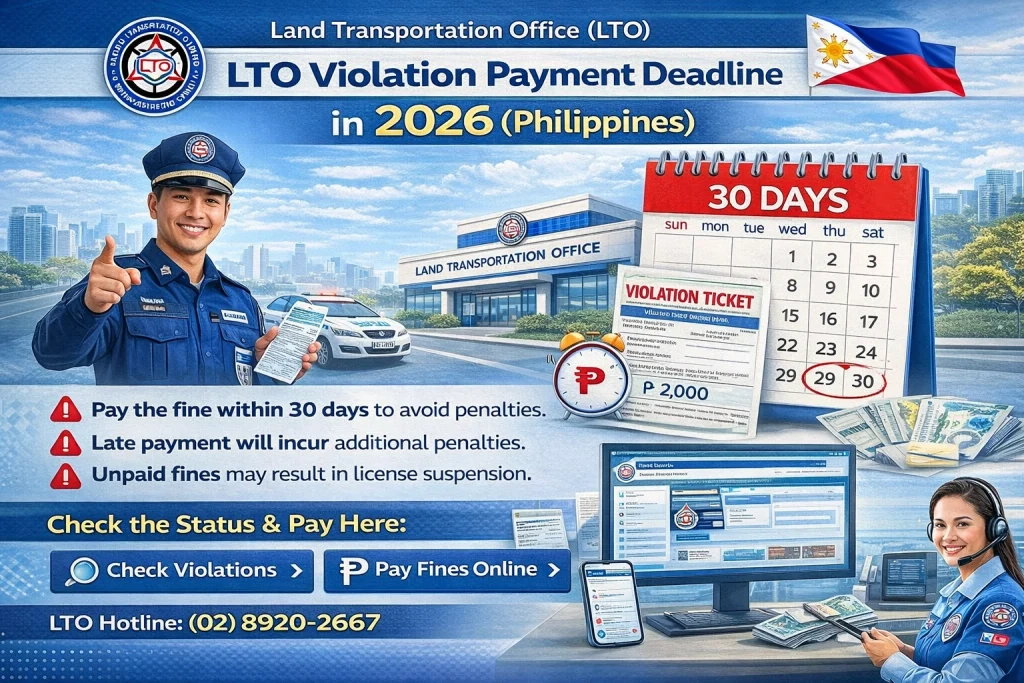
You must pay your recorded violation within 30 days from the date it was issued or within the deadline shown in your LTMS account.
This means:
This rule applies to most fines issued under the main LTO system. Specific local government units might have slight differences, but the 30‑day concept is the general standard.
How to Find Your Payment Deadline
You can find your violation deadline in two main ways:
LTMS Portal
Physical Ticket
If the deadline looks confusing, always follow whichever date is shown in your official LTMS account because that is the system used by LTO.
What Happens If You Miss the Deadline
If you don’t pay the fine by the deadline, the following can happen:
Additional Penalty
LTO may add extra charges or increase the fine amount.
Hold on Renewals
You may not be able to renew your driver’s license, vehicle registration, or other transactions until the violation is cleared.
Possible Suspensions or Notices
Repeated missed payments may lead to additional notices or enforcement actions, depending on the violation.
Missing the deadline doesn’t remove the need to pay. The fine still applies, but the cost may be higher.
How You Can Pay Your Violation
You can usually pay your fines in these ways:
Make sure you pay using an official method recognized by the LTO. Paying through unofficial channels increases the risk of incorrect payments or loss of proof.
Tips to Avoid Missing a Payment Deadline
Here are practical tips:
Check LTMS regularly
Log in every few days after a violation so you know when it appears and what the deadline is.
Take a photo of the ticket
If you got a physical violation slip, photographing it helps track the date and details.
Set reminders
Use your phone to remind yourself of the payment deadline early.
Pay early
Don’t wait for the last day — paying earlier reduces stress and avoids mistakes.
Keep proof of payment
Always save or download your payment receipt in case you need it later.
What If a Violation Doesn’t Show in LTMS Yet?
Sometimes violations take a few days or weeks to show up online. If you know you received a ticket but it hasn’t appeared in LTMS yet:
System uploads can be delayed.
Make sure your plate number, name, and CR/OR are correct in your LTMS profile.
Ask if the violation has been recorded and when it might show in the system.
In 2026, delays still happen, so checking early helps you avoid being late.
FAQs
Conclusion
Knowing the LTO violation payment deadline helps you stay legal, avoid extra penalties, and prevent problems when renewing a license or registration.
The general rule in 2026 is pay within 30 days of the violation or the date shown in your LTMS account.
Stay proactive, check violations regularly, and pay on time. If you are unsure about the deadline on a particular fine, contacting LTO support or the issuing office can help clarify it.


