LTO Certificate of Registration Sample: Guide to Vehicle Owners
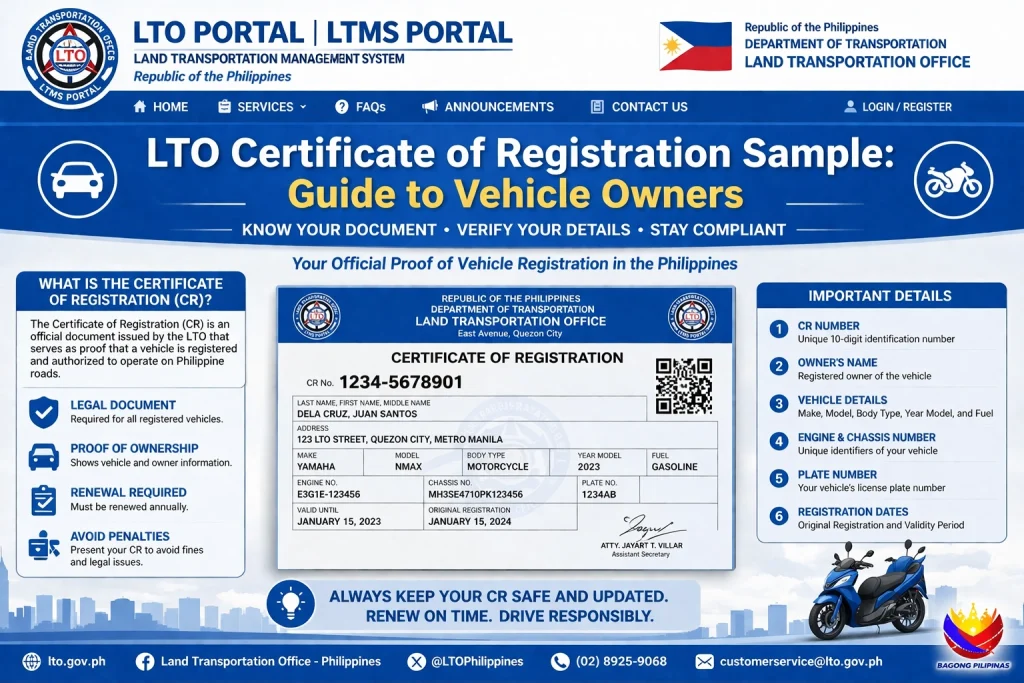
Your LTO Certificate of Registration, or CR, is one of the most important documents your vehicle will ever have. It proves that your car or motorcycle is officially recorded with the Land Transportation Office and legally recognized in the Philippines. In LTO’s own definitions, the CR certifies the registration of a motor vehicle, while the OR or Official Receipt proves payment for the transaction. That is why these two documents are usually treated as a pair, especially during renewal, inspections, ownership transfer, and road checks.
The Simple Meaning of an LTO CR
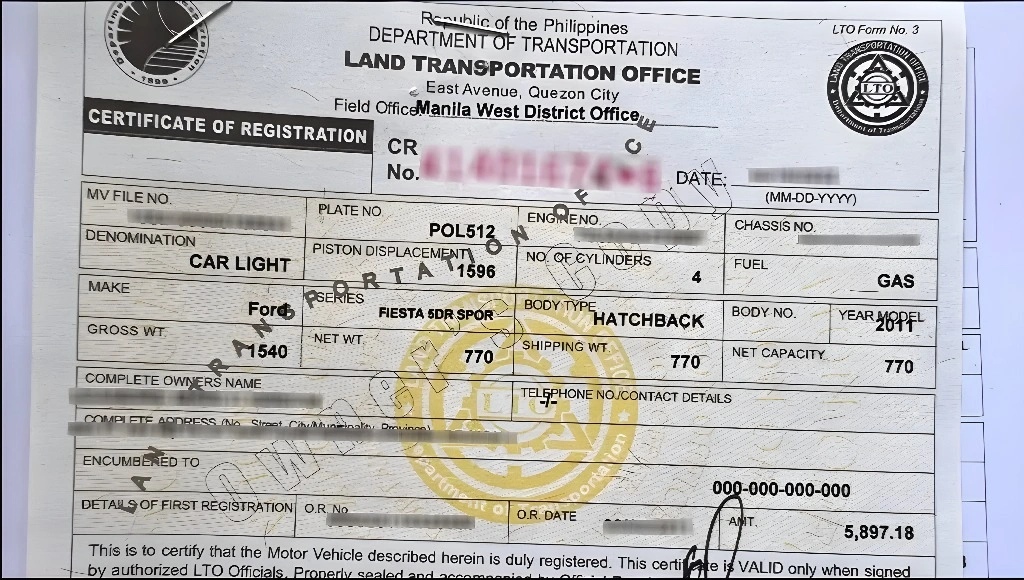
If you want the easiest way to understand it, think of the CR as your vehicle’s official identity paper. It connects the registered owner to the vehicle’s key details, such as the plate number, engine or motor number, chassis number, and other registration data. LTO’s latest rules continue to treat the CR as a core registration document, and public LTO references still pair it directly with the OR in motor vehicle transactions.
Why This Document Matters More Than Most Vehicle Owners Realize
The CR is not just a piece of paper you keep in your glove box. You need it for renewals, sale or transfer of ownership, loan or encumbrance checks, duplicate requests, and many verification-related transactions. LTO rules also continue to treat the absence of current registration documents seriously, and their enforcement references show that vehicles should not be operated on public roads without their current CR and OR.
What an LTO Certificate of Registration Usually Looks Like
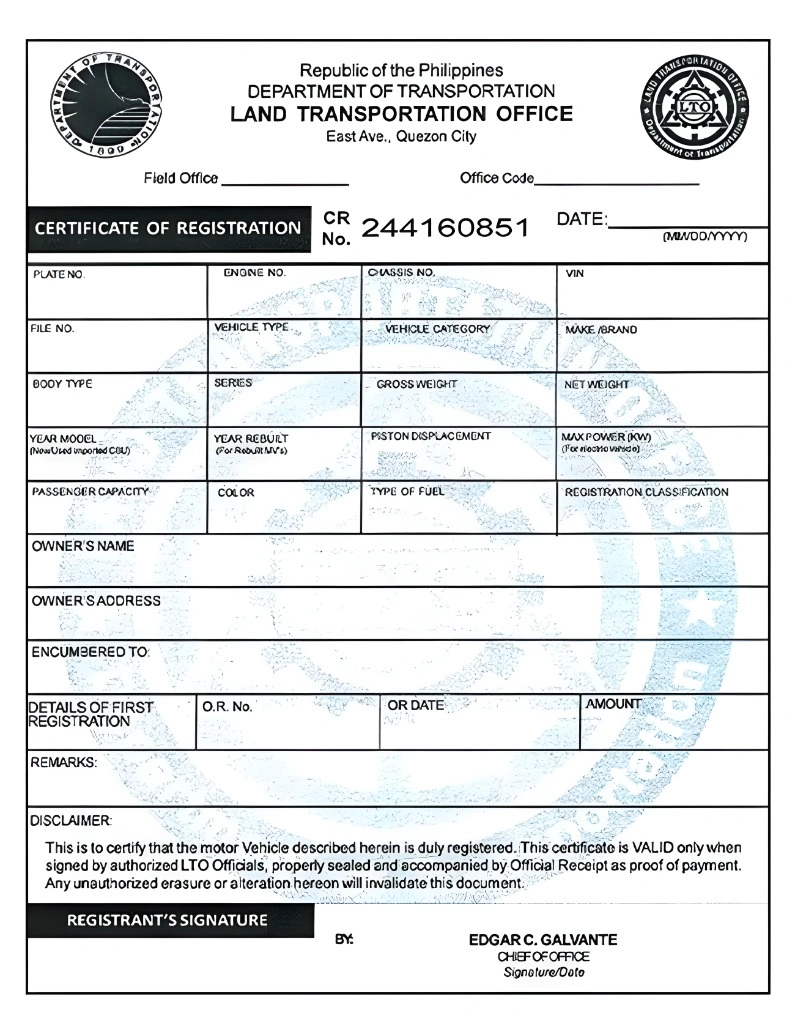
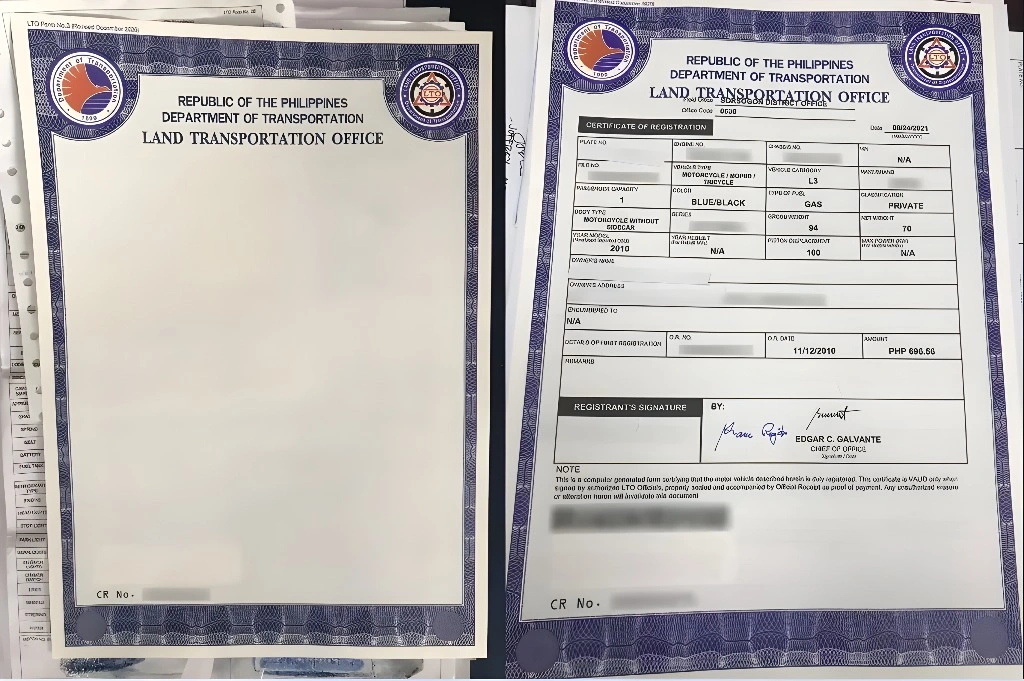
The exact layout can vary depending on the form version in use, because LTO has rolled out updated CR forms and even issued printing procedures for the new CR format. In 2026, LTO also released guidance on the use of a Temporary Certificate of Registration while the agency dealt with security paper supply delays. So when people search for an “LTO Certificate of Registration sample,” it is important to understand that the appearance may differ slightly depending on when and where it was issued.
A Sample LTO CR Layout for Easy Reference
Below is a simple text-based sample so readers can understand the usual parts at a glance:
Registered Owner: Juan Dela Cruz
Address: Sample Address, Quezon City
Plate Number: ABC 1234
Make/Series/Model: Honda / Click 125 / 2024
Engine or Motor Number: XXXXXXXX
Chassis Number: XXXXXXXX
Body Type: Motorcycle
Fuel Type: Gasoline
Date of Registration: January 15, 2026
CR Number: Sample only
This mock layout is only for understanding the format. The actual CR issued by LTO may use a different arrangement or paper format depending on the active template and printing system.
How to Read Every Important Field Without Getting Confused
The most important parts of a CR are the owner details and the vehicle identifiers. The owner section shows who the vehicle is registered to. The vehicle section identifies the unit itself through the plate number, engine or motor number, chassis number, make, model or series, and other technical details. This matters because even one wrong digit can create delays during renewal, reprinting, transfer, or verification. LTO’s regulatory and system references continue to treat these identifiers as the basis of valid registration records.
The Difference Between OR and CR That Many People Still Mix Up
A lot of vehicle owners still confuse the CR with the OR. The easiest way to remember it is this: the CR shows the vehicle is registered, while the OR shows that payment was made. LTO definitions published in recent official issuances still reflect that exact distinction. If you have only one of the two, your file is incomplete for many transactions.
Where to Check Your Vehicle Record Online
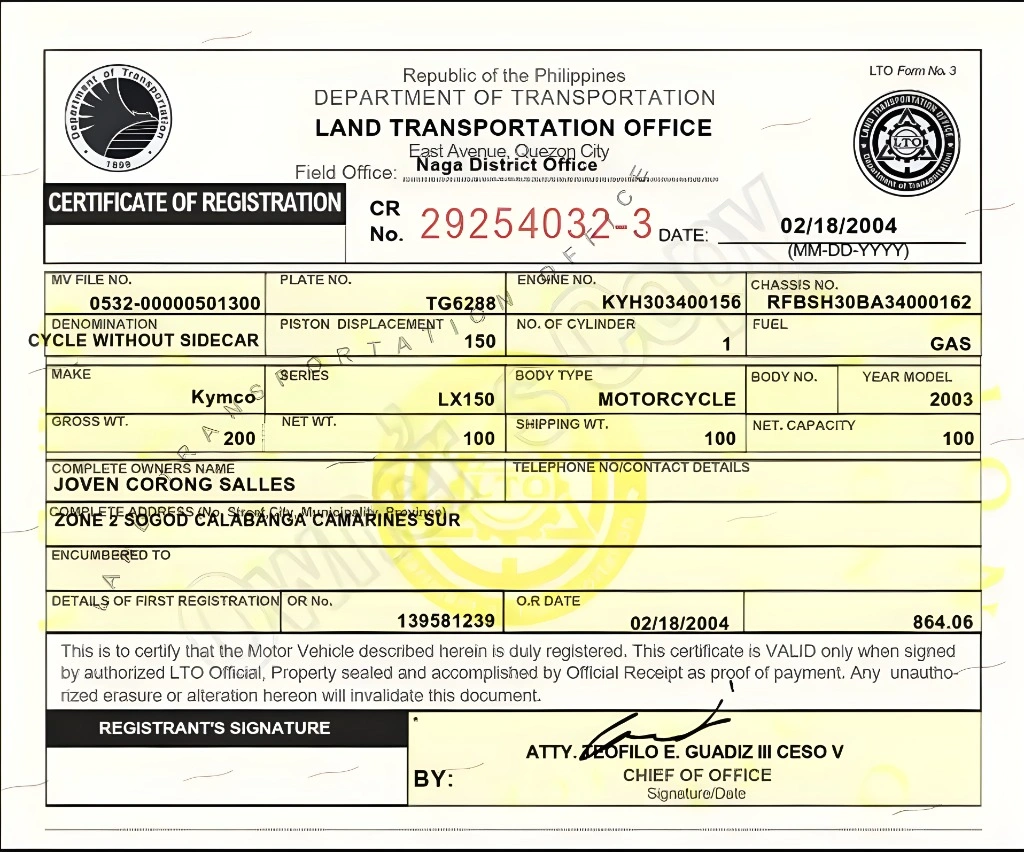
The official LTMS Portal remains the LTO’s online platform for motor vehicle services and record access. It is the right place to log in, review your registered vehicles, and check your linked records. However, the issuance, reprinting, and formal release of the CR are still controlled by LTO processes and official forms, which is why viewing a record online is not the same as self-issuing a legal CR.
What to Do If You Lose Your Certificate of Registration
If your CR is lost, damaged, or needs replacement, LTO references for duplicate and replacement transactions show that an Affidavit of Loss may be required, along with supporting registration records and other related documents depending on the status of the vehicle. For some cases, especially encumbered units, extra documentation may also be needed. That is why the safest advice is to prepare your identification, your current OR if available, and your affidavit before going to the LTO office handling your record.
How to Request a Duplicate CR the Right Way
LTO’s transaction references specifically list duplicate certificate of registration and related replacement actions as official registration services. The practical route is to visit the branch or office handling your motor vehicle record, submit the required supporting papers, pay the applicable fees, and wait for evaluation and release. Since some CR printing procedures have changed in recent years, branch processing can depend on the current form and system workflow being used.
What If There Is a Typo or Wrong Detail on Your CR
A misspelled name, incorrect engine number, wrong plate detail, or mismatch in the chassis information should be corrected as soon as possible. These errors can create bigger problems later when you renew registration, sell the vehicle, claim insurance, or verify ownership. Because CR printing and record handling are tied closely to LTO system procedures, the best response is to return to the LTO office and ask for correction before the mistake spreads across later transactions.
Temporary CRs Are Part of the Current Reality in 2026
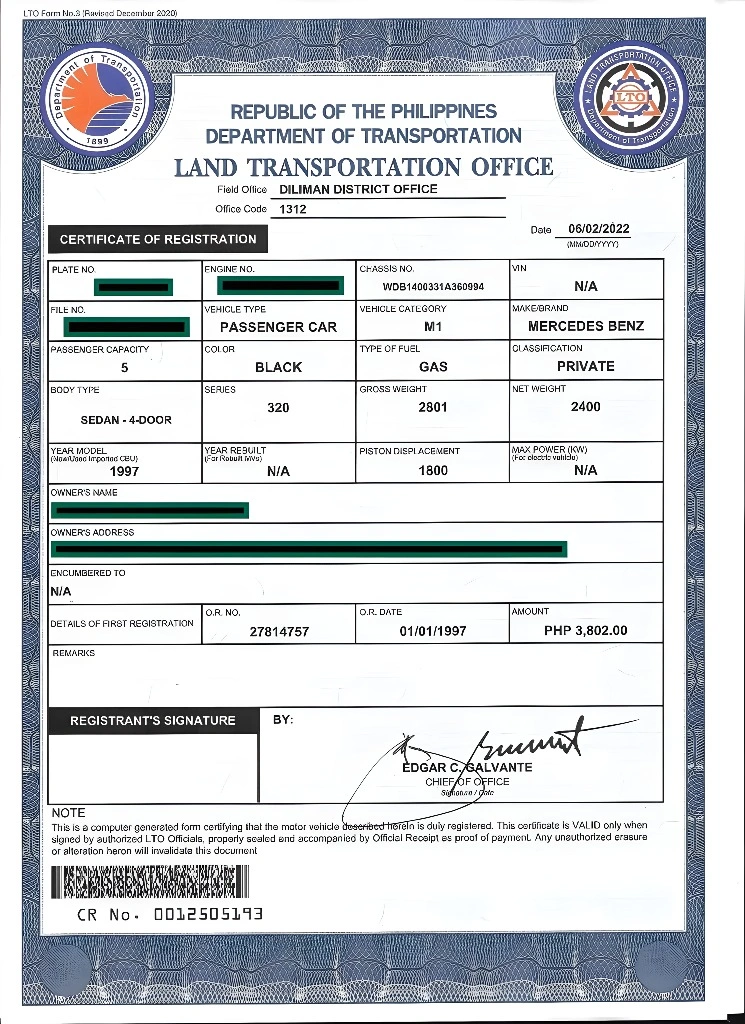
This is an important update for your article. In February 2026, LTO issued official guidance on the use of a Temporary Certificate of Registration due to delays in security paper delivery. That means some owners may encounter a temporary CR format before the regular security-paper version is available. This is highly relevant if your page is targeting current search intent, because many users now want to know whether a temporary CR is legitimate.
How to Keep Your CR Safe and Avoid Future Hassle
The CR should be protected from water, folding, fading, and accidental loss. A safe storage folder at home is ideal, while your travel copy should always be clean and readable. Since LTO and enforcement references continue to treat current registration documents as essential, a damaged or missing CR can create unnecessary friction during roadside checks and office transactions.
FAQs
Conclusion
Your LTO Certificate of Registration is more than a technical paper. It is the document that proves your vehicle exists properly in the LTO system and is connected to a legal owner. If you understand what it contains, know how to verify it, and act quickly when it is lost or incorrect, you avoid delays and protect your vehicle record. For any serious concern, the official LTMS portal and your LTO office remain the most reliable channels.